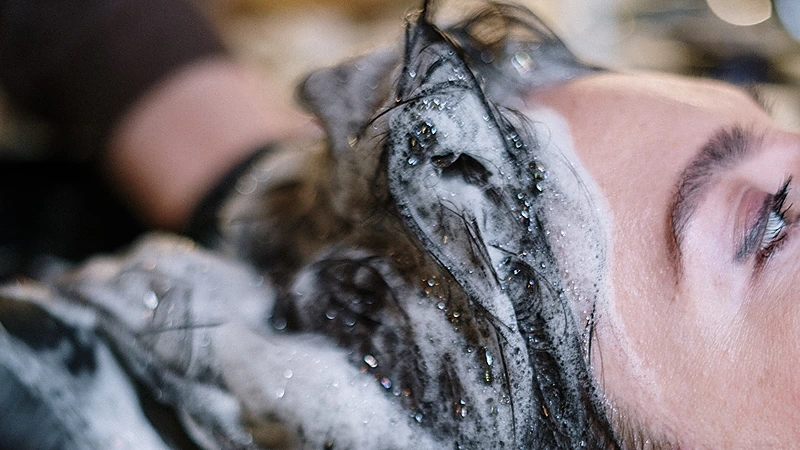
Many DIY haircare routines still rely on commercial shampoos, but simple homemade formulas can help support scalp balance and reduce buildup when used correctly. Ingredient-focused DIY shampoos are especially useful for people transitioning to natural haircare or looking to simplify their routine.
This recipe uses a small number of familiar ingredients, such as castile soap, botanical oils, and herbal infusions, to provide gentle cleansing. The goal is not instant hair growth, but a clean, comfortable scalp that supports healthier hair over time.
Ingredients Needed
Choose high-quality ingredients to boost the effectiveness and safety of your DIY beauty products.
- Castile soap which is liquid soap made of pure olive oil
- Fenugreek and black seed serum, made of fenugreek seed and black seed. We have already covered making this powerful hair serum in this article: DIY Fenugreek and Black Seed Serum: The Secret to Longer, Healthier Hair
- Rosemary essential oil
- Sweet almond oil
- Mica color powder – Optional
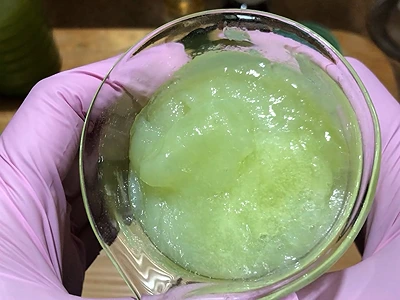
Castile soap 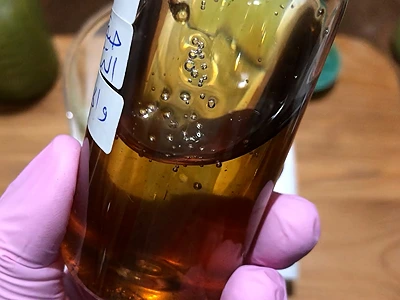
Fenugreek and black seed serum
Tools Needed
- Scale to measure quantities
- Glass beaker
- Whisk for mixing
- Container to store the shampoo
- PH acidity test kit
Prior to use, ensure that both your utensils and containers are properly cleaned and disinfected. Wash them with warm soapy water, dry with a tissue, and then sanitize by spraying with 70% medical alcohol. Wipe them clean and let them air dry before use.
Steps: DIY Shampoo for Hair Growth
1- Start by putting 100 grams (3.52 oz) of castile soap in the beaker.
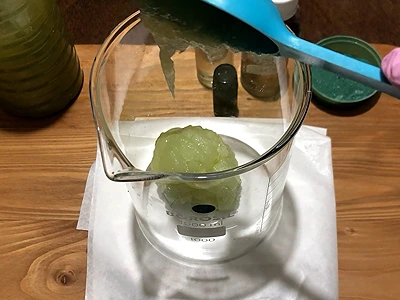
2- Add 5 grams (0.17 oz) of sweet almond oil.
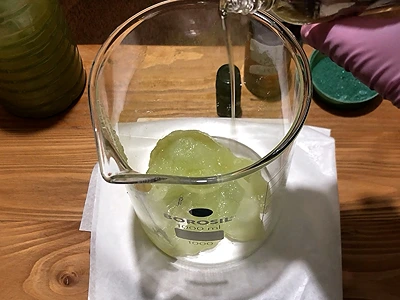
3- Add 10 grams (0.35 oz) of the fenugreek and black seed serum.
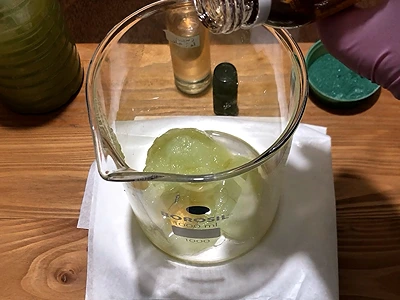
4- Mix the contents with a whisk.
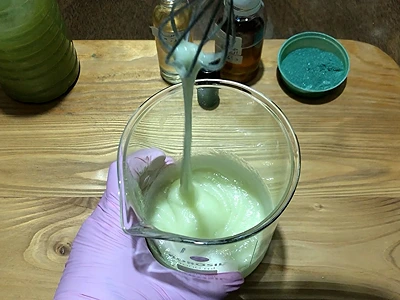
5- Add 5 drops only of rosemary essential oil.
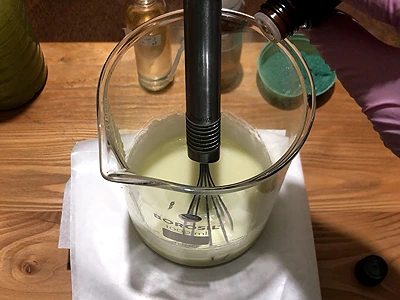
6- Mix again.
7- As an optional step, you can add color to the shampoo. The proper way to add color is to mix a little of the mica powder with a small quantity of sweet almond oil.
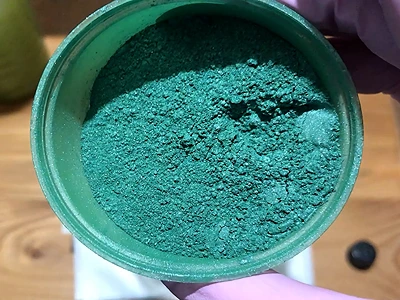
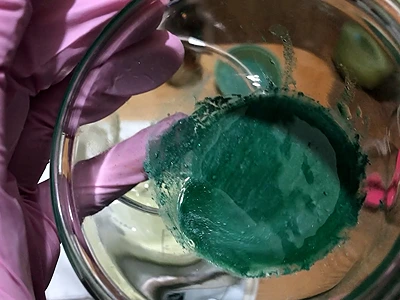
Mix them thoroughly, then add the color mix to the shampoo. Do not add the mica powder directly to the shampoo.
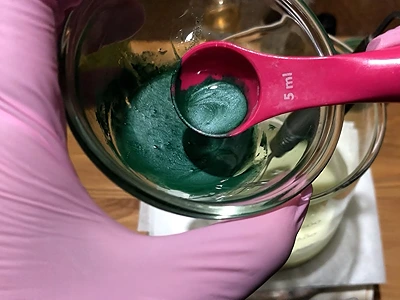
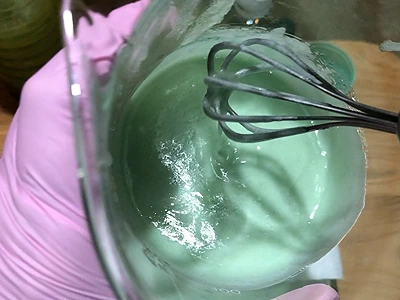
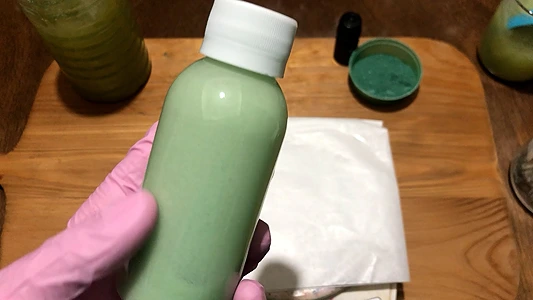
8- The DIY Shampoo for Hair Growth is now done. Pour it into a suitable container and it is ready to use.
PH Acidity Test
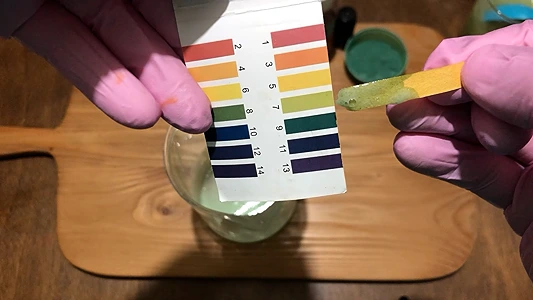
It is important to check the PH of the DIY Shampoo for Hair Growth. It should be 4.5 to 6.5. The PH test kit I am using indicate colors corresponding to 5 and 7. Using these colors is a sufficiently practical approximation.
Take a leaf from the PH test kit, and immerse it in the shampoo for about 15 seconds. Take it out, and wait 2-3 minutes. After that, compare the color of the leaf against the range of colors on the PH test kit. In our case, the matching color is 7 which may be acceptable, however I prefer to bring the PH down:
- Simply, prepare a solution of 10 grams (0.35 oz) of distilled water and 10 grams (0.35 oz) of citric acid. Add 3 drops first to the shampoo, mix well, and re-test the PH. Follow this one drop at a time till the reading is in a good range.
Let’s Try it Out
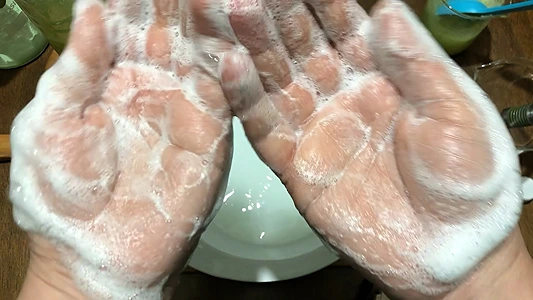
In this short video, I will try it out on my hands.
How To Use: DIY Shampoo for Hair Growth
To use this DIY shampoo effectively, follow these simple steps during your regular hair-washing routine:
a. Wet your hair thoroughly:
Begin by wetting your hair with lukewarm water. Make sure the scalp and lengths are evenly damp.
b. Dilute the shampoo:
Place a small amount of the shampoo in your palm and mix it with water. This helps create a lighter lather and reduces the chance of residue.
c. Apply to the scalp:
Gently massage the diluted shampoo into the scalp using your fingertips. Focus on the roots, where oil and buildup tend to collect. Lightly work the lather through the lengths without rubbing.
d. Allow brief contact time:
Let the shampoo sit for a short moment before rinsing. This allows the ingredients to interact with the scalp without over-cleansing.
e. Rinse thoroughly:
Rinse with lukewarm water until no product remains. Pay attention to the scalp and hairline.
f. Condition if needed:
A conditioner or leave-in product may be used if your hair feels dry after cleansing. Some hair types may not need additional conditioning every wash.
g. Use based on scalp comfort:
This shampoo can be used as part of a regular routine. Adjust frequency according to how your scalp and hair respond.
Consistency and gentle handling play an important role in maintaining scalp comfort and overall hair condition over time.
What This DIY Shampoo Is Designed to Support
This DIY shampoo is formulated to support hair and scalp care goals commonly associated with simplified, ingredient-focused routines. Potential benefits include:
Supports scalp balance:
Gentle cleansing helps remove buildup while maintaining a comfortable scalp environment, which is important for long-term hair health.
Helps maintain a clean scalp:
Castile soap provides mild cleansing without aggressively stripping natural oils when used in diluted form.
Contributes to hair strength and manageability:
Botanical oils and herbal ingredients can help improve how hair feels and behaves over time, especially when combined with gentle handling.
Suitable for simplified routines:
This formula works well for those transitioning toward natural haircare or reducing reliance on complex product systems.
Adaptable to individual needs:
Ingredient proportions can be adjusted to suit different hair types, sensitivities, or environmental conditions.
Supports sustainable haircare practices:
Making shampoo at home can reduce packaging waste and limit unnecessary additives found in some commercial products.
This shampoo is intended as a supportive part of a broader haircare routine rather than a standalone solution, with results depending on consistency, hair type, and overall care practices.
Here are more articles on how to care for your hair:
- DIY Aloe Vera Coconut Oil for Hair: Achieving Strong and Shiny Locks at Home With 2 Ingredients
- Empower Your Curls: How to Make a DIY Cream for Curly Hair at Home
- Get Glossy and Gorgeous Hair with DIY Hair Mist: Try Our Simple Recipe Now
- Revitalize Your Hair with DIY Rosemary Hair Growth Serum
- Refresh Your Hair with DIY Rosemary Hair Toner
Video How-To on My Channel | Jinane World
The steps to make the DIY Shampoo for Hair Growth are demonstrated in this video.